





Ngā Tikanga O Te Taiao


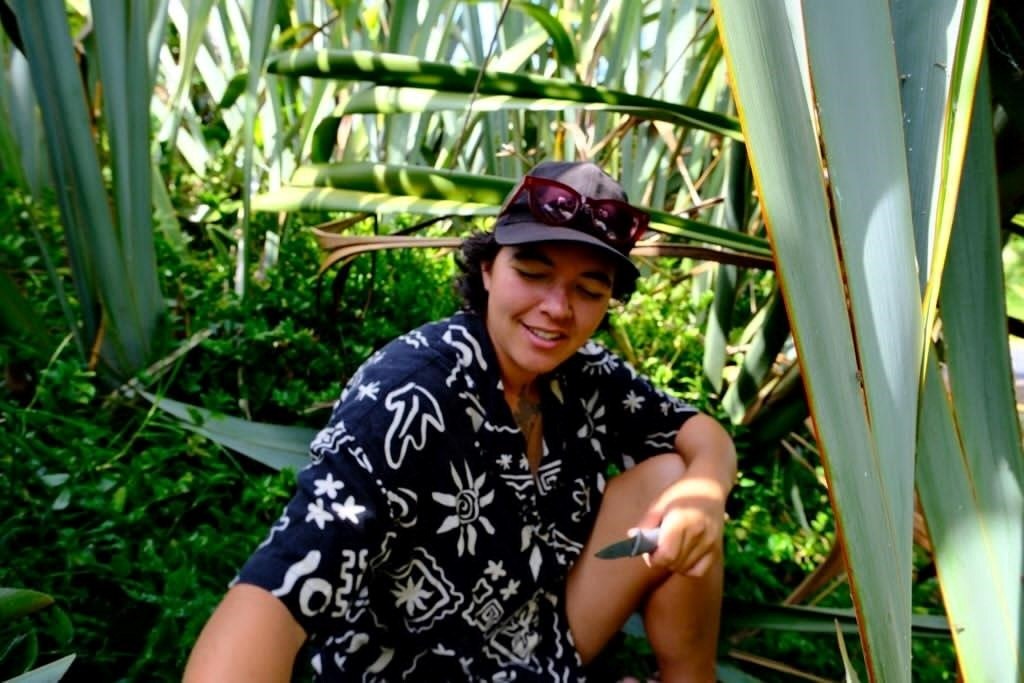
Marino Magee
Tauwhao Ki Otawhiwhi
“He aha te mea nui o te ao, He tangata he tangata he tangata”
This weaving piece is inspired by three aspects of tikanga (rules/guidelines) that I believe best represent our people when we come together and be in the natural environment (taiao). The three tikanga are Korero, Karakia, and Koha, each of which have important meanings and can guide us on how we interact in the taiao (natural environment).
The top piece in blue represents Ranginui, our sky father, and the bottom piece in green represents Papatuanuku, our earth Mother. In the world of Māori, these are our parents, who have been made to be apart so that we can exist, making us all connected to each other and especially to our environment. The three pieces in the middle are our tikanga, which talk about what we could do as a community to not just survive, but to thrive sustainably for future generations to come.
Korero - which means to talk. My interpretation of korero for this piece is before you enter the taiao, talk to people you trust about where you are going, what you are doing and most importantly, when you will be coming back. If you are by yourself, korero out loud, korero to the birds and the trees, if you are in the moana, korero to the fish and the sea, let your words in your head out into the environment to let it know you are here, and with good intentions.
Karakia - In Te Ao Maori we have karakia. Including karakia specifically relating to the taiao, the reason we karakia for the taiao is to first give our thanks and acknowledgment to Ranginui and Papatuanuku. We thank them for their existence and for the space we are gifted to live on today. We then thank our atua maori for creating these places, like the Forest and Sea and all its creatures within. Karakia connects us to our spiritual well-being, and lastly, it gets us focused on the correct mindset of the kaupapa for our day.
Koha - One of the most important tikanga, I think, translates to gift. When Kaitiaki work or when they are in the taiao, they always think of ways to give back, ways like picking up rubbish, observing their environment, water monitoring or planting trees. Even when they collect kai from our taiao a kaitiaki will leave the baby and its parents of all creatures, they will leave the smaller pipi and mussels, give back their first fish or leave enough flowers and berries on a tree for the birds and the bees, The reason we act this way is to look after our taiao but to also ensure the creatures we rely on for kai can also continue living alongside us. This way of living will ensure a regenerative future for all life in the taiao, including ourselves.
Plats in between - Represent all us people and our connection to our taiao. If you look closely, I've entwined muka, signifying our spiritual connection in side all of us, just like the muka you find inside the harakeke leaf I've extracted to show a beautiful white fiberous string, tying us all together as one.
I have made this piece in hopes of inspiring our next generation of kaitiaki and getting our whole community to learn, to practice our tikanga and to advocate for our Taiao.